

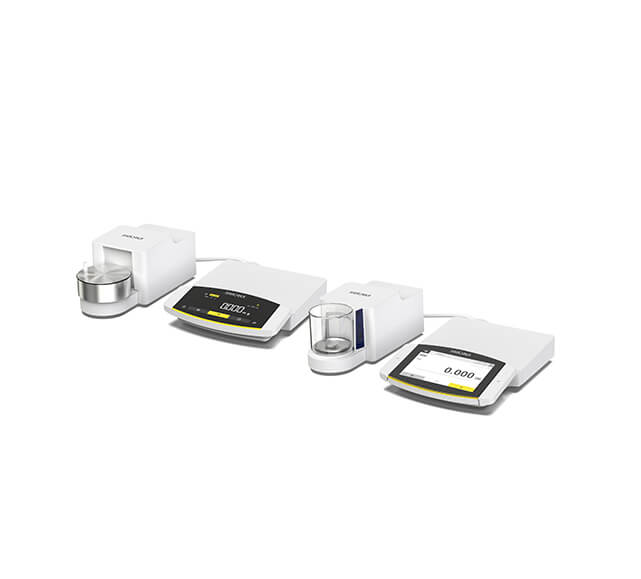
Micro Balances
High-Quality Titanium for High-Precision Measurements
The Sartorius micro laboratory balance truly stands out with its unique titanium weighing pan supplied as standard equipment. Non-magnetic and completely inert when in contact with aggressive substances, the titanium components of the Sartorius micro balance ensure 100% protected weighing.
Draft Protection
To minimize environmental influences that can compromise the reliability of weighing results, all micro balances are equipped with a manual draft shield, automatic draft shield, or touch-free draft shield featuring a learning function and illumination. Stainless steel draft shields are also available for filter weighing applications.
Temperature Control
To maximize the efficiency of laboratory work, micro laboratory balances are equipped with a unique temperature management system or a separate electronic control unit isolated from the weighing module to maintain stable climate conditions within the weighing chamber.
Micro Balance Services
The demand for compliant, reliable, and accurate laboratory data continues to grow steadily across all industries. With our certified and accredited services, we support and maintain your laboratory weighing equipment throughout its entire lifecycle. We help ensure equipment longevity, minimize downtime to reduce production losses, and enable faster, more consistent, and repeatable results.
- Categories: Laboratory Balances | Laboratory Balances |
What Is the Difference Between Calibration and Adjustment?
Calibration: The process of determining the correlation between the displayed value and the actual mass of the sample on the balance. Calibration does not require any modification of the weighing instrument.
Adjustment: The process of correcting discrepancies between the displayed value and the true mass value measured by the weighing instrument (balance).
How Is a Balance Leveled?
Every balance must be properly leveled to ensure accurate weighing results.
Ideally, balances feature automatic, motorized one-touch leveling. These balances level themselves automatically at the touch of a button. Other balances include integrated real-time leveling assistance with an interactive user guide for proper leveling.
In both cases, an integrated electronic level sensor continuously monitors the leveling status and displays an alert if the balance is not properly leveled.
Balances without these features must be leveled manually. Easily accessible leveling feet facilitate this process.
Balances with 2 front leveling feet:
To level the device, position the air bubble in the center of the circular level indicator by turning the leveling feet to the left or right.
Balances with 4 leveling feet:
Extend the rear leveling feet until they make contact with the installation surface. To level the device, center the air bubble within the circular level indicator by turning the leveling feet to the left or right. Ensure that all four leveling feet are firmly in contact with the surface.
Note: Each time the balance is leveled, it should also be adjusted. Additionally, whenever the installation location changes, the balance must be re-leveled and adjusted. Always verify that all four leveling feet are properly supporting the device.
What Does isoCAL Mean?
Today, most balances are equipped with a fully automatic calibration and adjustment function that is activated at predefined or user-defined intervals. In addition, the calibration/adjustment procedure is automatically triggered when a specified temperature variation is exceeded. This ensures the balance's accuracy without requiring operator intervention.